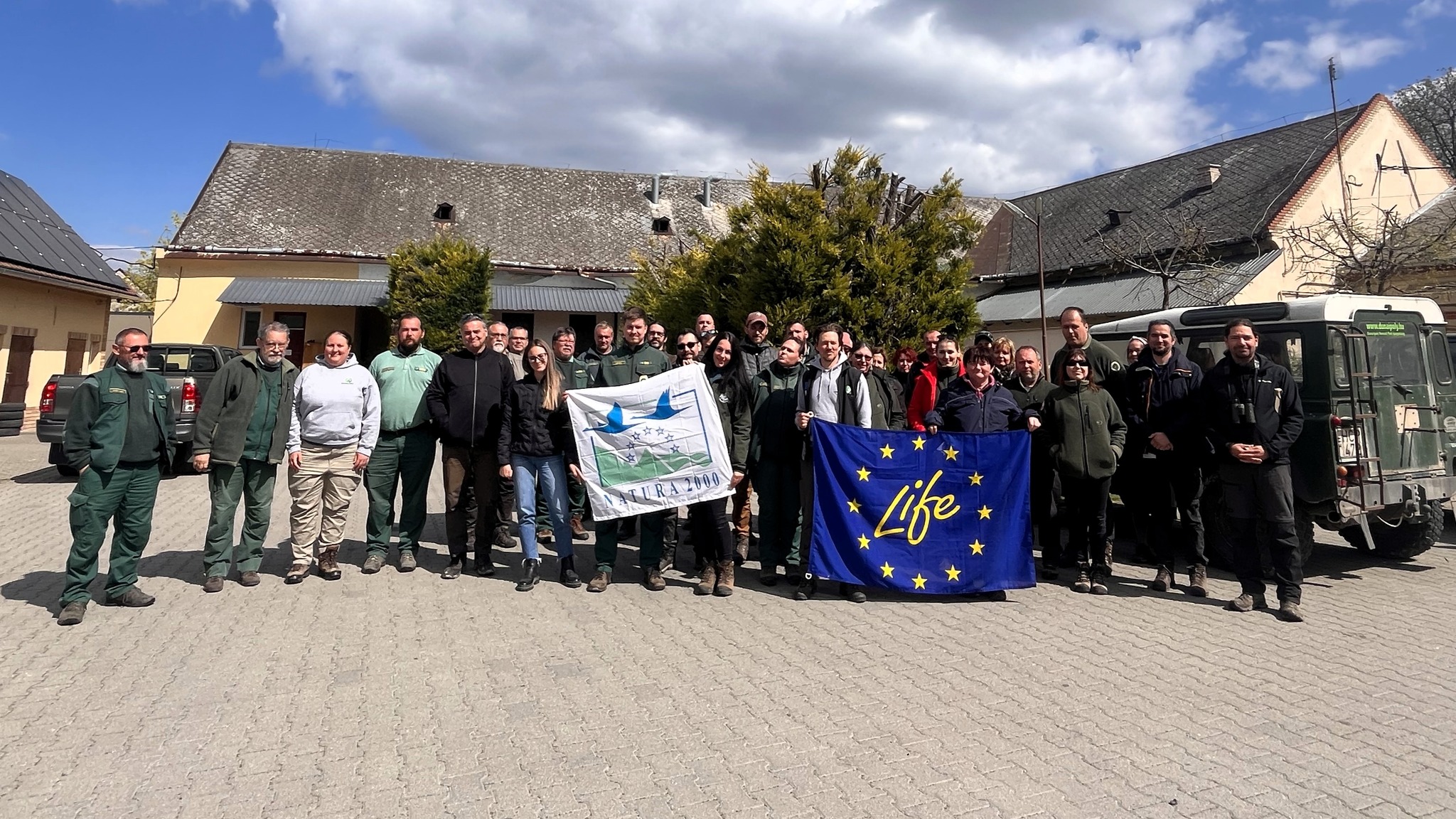
Experts from the Grassland Life IP project, a professional project team being active in the fields of grassland manegament and conservation, visited us. The participants became acquainted with the conservation management practices implemented in Miklapuszta during in thorough field visit.The following report summarizes their experiences and impressions.
We would like to take this opportunity to thank them for the valuable exchange of professional knowledge and for the enjoyable and productive day spent together!
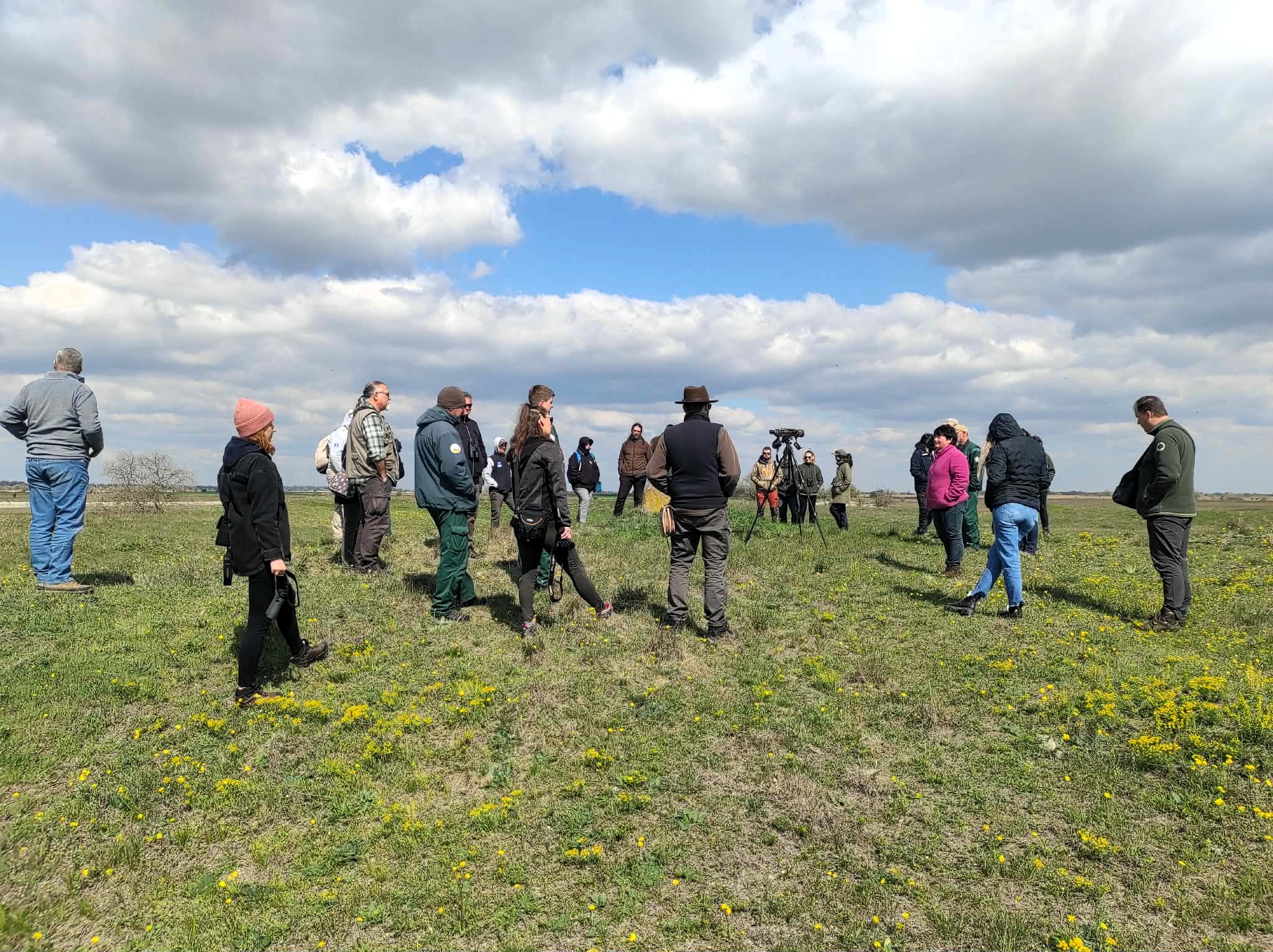
As part of the Grassland Advisory Service established by the LIFE-IP GRASSLAND-HU project, we took part in a field visit to Miklapuszta, located on the Danube Plain at the boundary of the Solt Plain and the Kalocsa–Sárköz region. This unique alkaline habitat developed after the regulation of the Danube, as a result of altered groundwater dynamics. The low-lying, dazzling white saline patches that appear in summer are interspersed with slightly elevated areas representing outstanding natural value with their distinctive microtopography and rich biodiversity. These mosaic-like steppes are remarkable not only for their vegetation but also as important habitats for migratory birds, arthropods, and many other animals.
During the field day, experts from the Kiskunság National Park Directorate, the HUN-REN Centre for Ecological Research, and the Danube Region Nature and Environmental Protection Public Foundation guided us through the area and introduced the ongoing conservation work. The results of the LIFEforBUGSandBIRDS project were presented and the global decline of arthropods, as well as the harmful effects of ivermectin-based antiparasitic treatments were discussed. While these substances effectively eliminate internal parasites in livestock, anthelmintics are also excreted into the natural environment through the dung of grazing animals. As a consequence, anthelmintics unintentionally decimate populations of various dung beetle species. It was emphasized that insect-friendly grazing practices could prevent these effects—particularly in the case of dung beetles and other grassland arthropods.
In recent decades Miklapuszta has become neglected as many similar areas in the country, and large-scale negative trends linked to land abandonment, like shrub encroachment and reed expansion have begun. However, thanks to the positive effects of “insect-friendly grazing” applied within the project area, we could observe species during our short tour, such as the Early Spider Orchid, the Fragrant Orchid, and the Kentish Plover, which breeds at only a handful of locations in Hungary.
An additional, distinctive aspect of the visit was that part of the study area is managed by the prison service, meaning that conservation activities take place within a particularly unique framework. There are few grasslands in the country that are so strictly “guarded.”
Thanks to Flóra Hák and Péter Balázsi for the report!
Photos: Zita Zsembery (HOI), Péter Balázsi (BNPI)