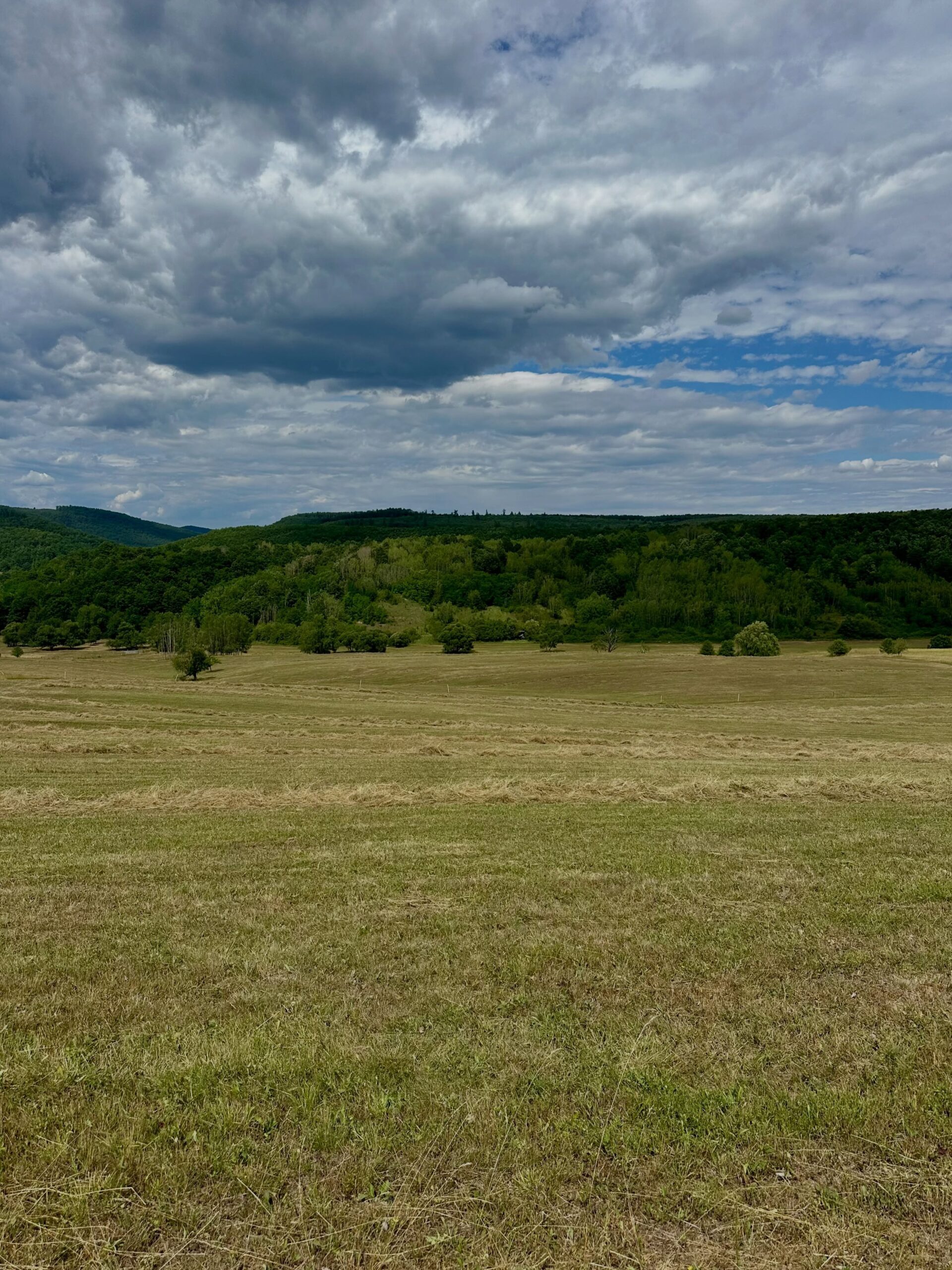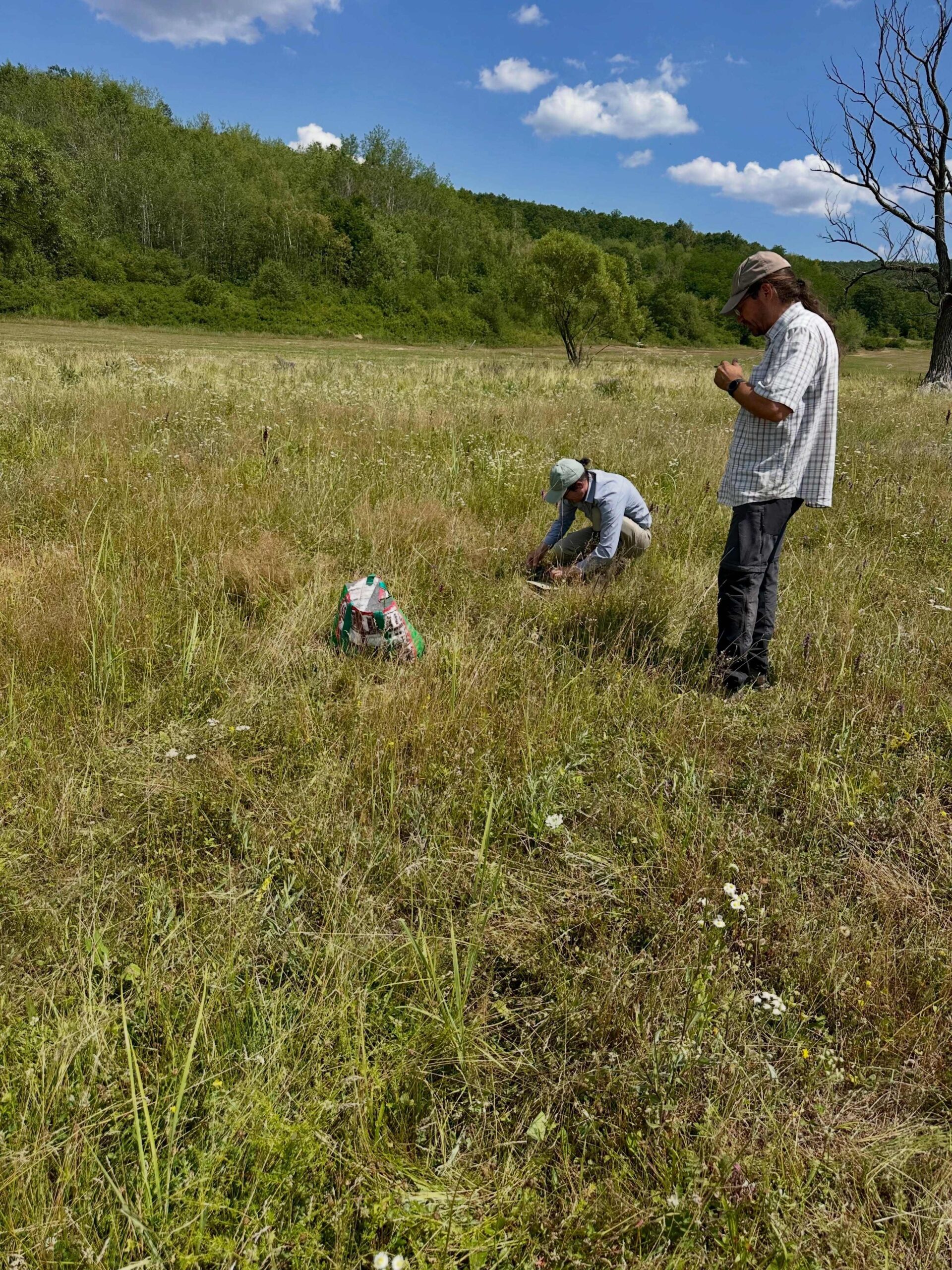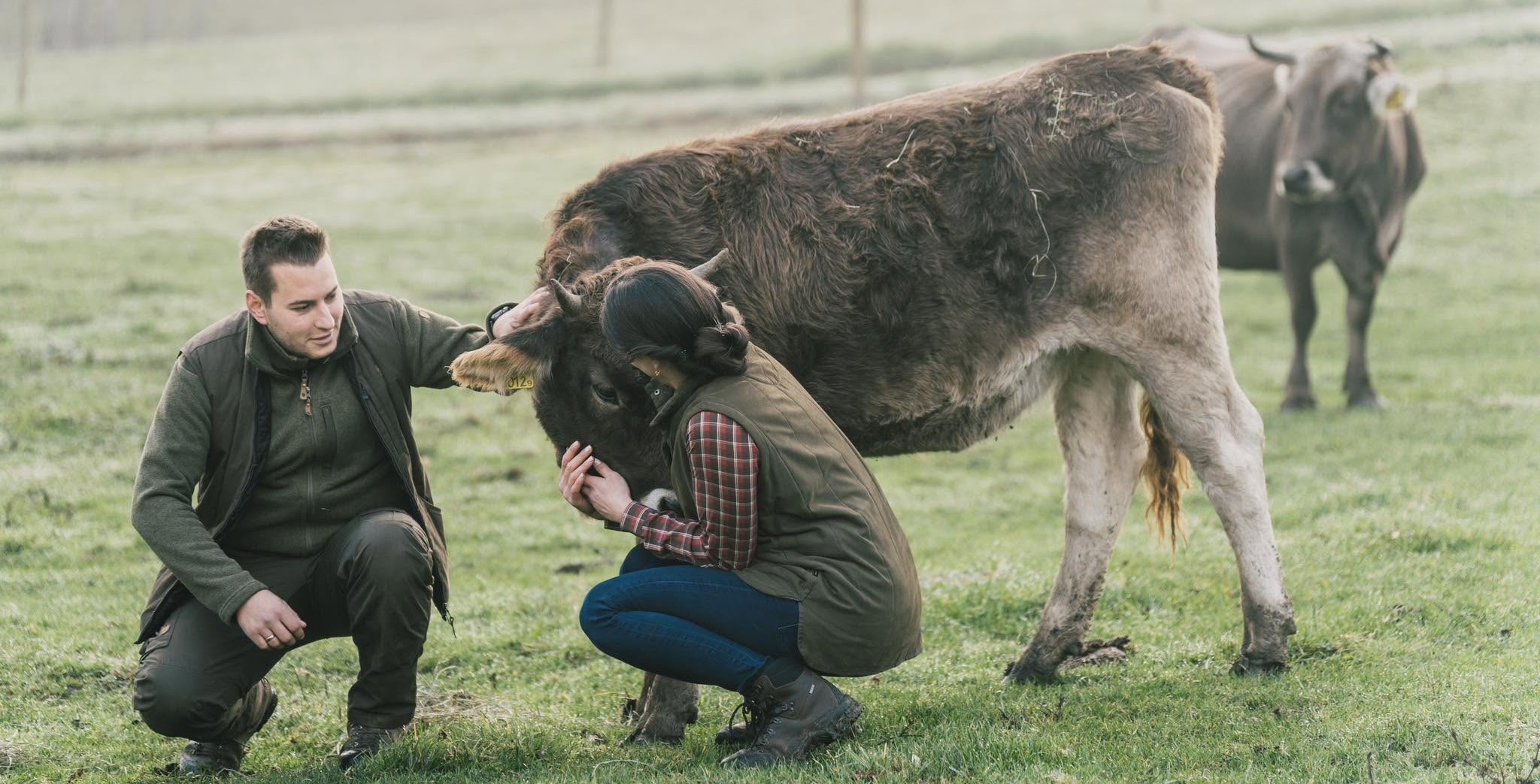
As part of the LIFE for BUGS and BIRDS project, our team conducted a dung beetle survey at the Horhos-Völgyi Estate. During the fieldwork, we searched for characteristic species of hilly and mountainous pastures while collecting valuable data on pasture ecosystems and the impacts of nature-friendly farming. Simultaneously, we learned about agricultural practices operating in harmony with nature, alongside the advantages and challenges of rearing the Carpathian Brown cattle breed.
The Horhos-Völgyi Estate recently joined the partner network of the LIFE for BUGS and BIRDS project. The farm operates with an exemplary approach: it integrates nature conservation aspects as a fundamental part of its everyday agricultural operations. The management of the pastures and the rearing of the Carpathian Brown cattle are guided by an ethos that mutually serves animal welfare and biodiversity conservation.
Dung beetles are key actors in the ecological functioning of pastures. They rapidly decompose cattle dung and incorporate it into the soil, thereby contributing to nutrient cycling, improving soil structure, and providing a food source for numerous insectivorous bird species. Even a single dung pat hosts a rich ecological community, making it essential for these insects to find suitable living conditions. Responsible veterinary practices play a significant role in this. The estate pays special attention to ensuring that veterinary medicinal products containing ivermectin are administered only when strictly justified. This is critical because residues of the substance can persist in the dung, where they can harm dung beetles and other beneficial arthropods. This nature-friendly approach allows the ecological processes of the pastures to function undisturbed, ensuring the long-term preservation of the area’s rich biodiversity.
We would like to thank the staff of the Horhos-Völgyi Estate for their warm hospitality, the insightful professional discussions, and the glimpse into the daily operations of near-natural farming. It was a pleasure working in such a unique environment, and we trust that the jointly collected data will further advance the protection of pasture ecosystems and dung beetles.
Written by: Renáta Gál
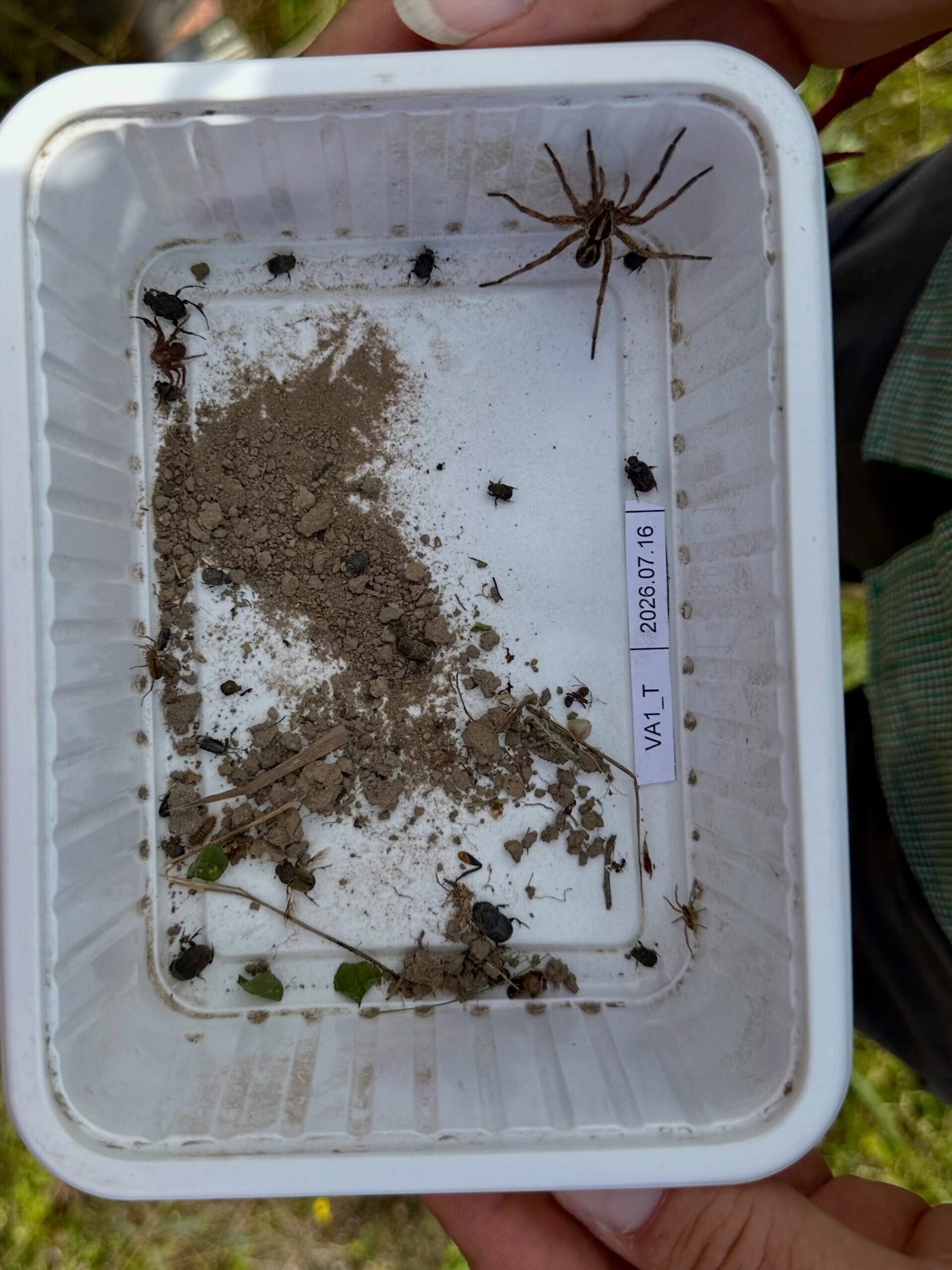 Foto: Horhos Völgyi Ökobirtok