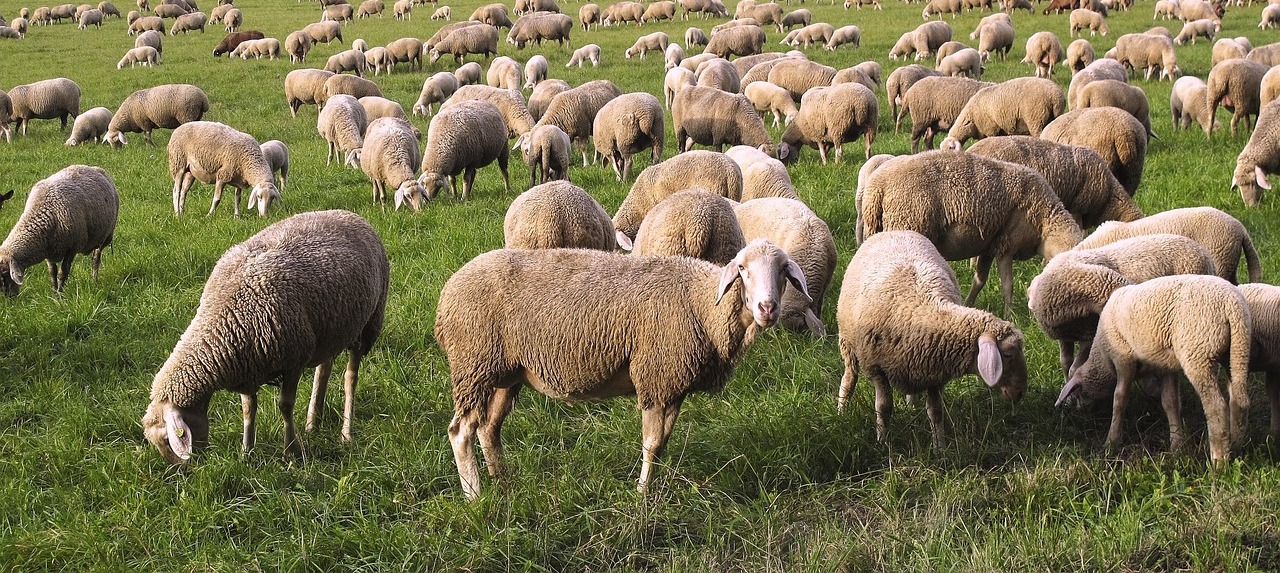
For generations, 24 April – St. George’s Day – marked one of the most important days of the year. Among livestock-keeping communities, the weather and pasture conditions determined the exact timing, but traditionally this was the day when animals were first turned out from their winter quarters to pasture. It has also marked the hiring of shepherds and farmhands and was widely regarded as the true beginning of spring. As an ancient pastoral celebration, St. George’s Day is closely associated with a rich tradition of folk customs and beliefs. One widespread custom was to lead cattle over a chain and an egg before they were turned out to pasture. According to folk belief, this ritual would make the animals as strong as the chain and as round and healthy as the egg. Great importance was also attached to the first green branch used to lead the livestock out to graze. As the old saying goes: “May the livestock flourish as the leaves unfold on the green branch.”
In practice, turning livestock out to pasture is not a single-day event but a process that may extend over several weeks and its timing depends on several natural conditions. The beginning and end of the grazing season are determined not by the calendar, but by weather, soil moisture, the condition of the grassland vegetation, and local topography. Of these, pasture conditions and the prevailing weather are the most important. Temperature and precipitation strongly influence both the growth of grassland vegetation and the condition of the ground. These require particular attention when managing protected natural areas, as large grazing animals can cause significant trampling damage on wet or unstable fields, potentially harming the grassland vegetation. In Hungary, the grazing season generally extends from the second half of April until the end of October. However, as noted above, neither its beginning nor its end should be determined by the calendar alone. Grazing should begin only when the ground has dried sufficiently and the grass has reached an appropriate height.
From a livestock management perspective, preparations for the grazing season begin well before spring. They actually begin in the autumn of the previous year with the pasture maintenance and cleaning, followed by routine animal health and husbandry procedures before livestock are turned out to graze. These include ear tagging, replacing lost ear tags, and hoof trimming. In spring, all livestock require a gradual transition to grazing and fresh pasture. Rather than being moved directly onto their summer pastures, they first undergo a one- to two-week acclimatisation period, during which they graze for short periods twice a day before remaining on pasture full-time.
Grazing remains the most efficient and cost-effective way of feeding livestock. However, this is true only when grazing is managed sustainably. The relationship between livestock and grasslands is not merely an economic one—it is also a matter of environmental protection, nature conservation and landscape management. Grazing provides livestock with a natural source of forage while also serving as one of the most effective tools for conserving grasslands and floodplain habitats. Many grasslands of high conservation value have been preserved in Hungary thanks to grazing-based livestock farming.
Today, one of the growing challenges facing grassland ecosystems is the use of anthelmintics, such as ivermectin, which enter pastures through the dung of treated grazing livestock. Dung deposited on pastures provides an essential resource for a wide range of arthropods, including dung beetles (Scarabidae) and various species of true flies (Brachycera). Together, these organisms form the dung-associated arthropod community, playing a vital role in nutrient cycling and the healthy functioning of grassland ecosystems. Studies have shown that dung from ivermectin-treated livestock attracts dung beetles; however, ivermectin can kill either the eggs laid in the dung or the larvae that hatch from them. Research has also shown that when livestock treated with ivermectin regularly graze the same pastures, arthropod populations may decline by as much as one-third to one-half within just five years due to reduced reproductive success.
By simply adjusting the timing of ivermectin treatments, however, farmers can make a significant contribution to preserving grassland biodiversity. One straightforward way to reduce these impacts is to administer veterinary medicines containing ivermectin at least six weeks before livestock are turned out to pasture or, alternatively, at the end of the grazing season. This allows sufficient time for ivermectin to be eliminated from the animals’ bodies, ensuring that during the growing season (from spring to autumn), grazing livestock do not introduce ivermectin into grasslands through their dung. When livestock are treated after they have been brought in from pasture, parasites acquired during the grazing season are prevented from being carried into their winter housing. These preventive measures can substantially increase the abundance of dung-associated arthropod populations while also improving the efficiency of dung decomposition.
The presence of dung on pastures is a natural and essential part of maintaining and enhancing biodiversity. At the same time, its rapid decomposition by dung-associated arthropods is also beneficial to farmers. These organisms play a crucial role in breaking down and recycling dung. When their populations decline, dung decomposes much more slowly—or, in some cases, hardly at all—as can already be observed in many grazed grasslands across Hungary. Dung that remains on pastures inhibits grass germination and can damage the surrounding vegetation creating favourable conditions for the establishment of undesirable plant species, including pioneer weeds and invasive non-native plants.
Healthy grassland arthropod communities provide substantial benefits to farmers through the efficient decomposition of dung, making their conservation not only ecologically important but also economically beneficial. In addition, dung-associated arthropods are an important food source for many other invertebrates, including spiders (Araneae), ground beetles (Carabidae) and clown beetles (Histeridae). They also provide an important food source for many grassland vertebrates, including protected reptile species, as well as declining populations of farmland- and shorebirds.
Written by: Renáta Gál, Csaba P. Nagy