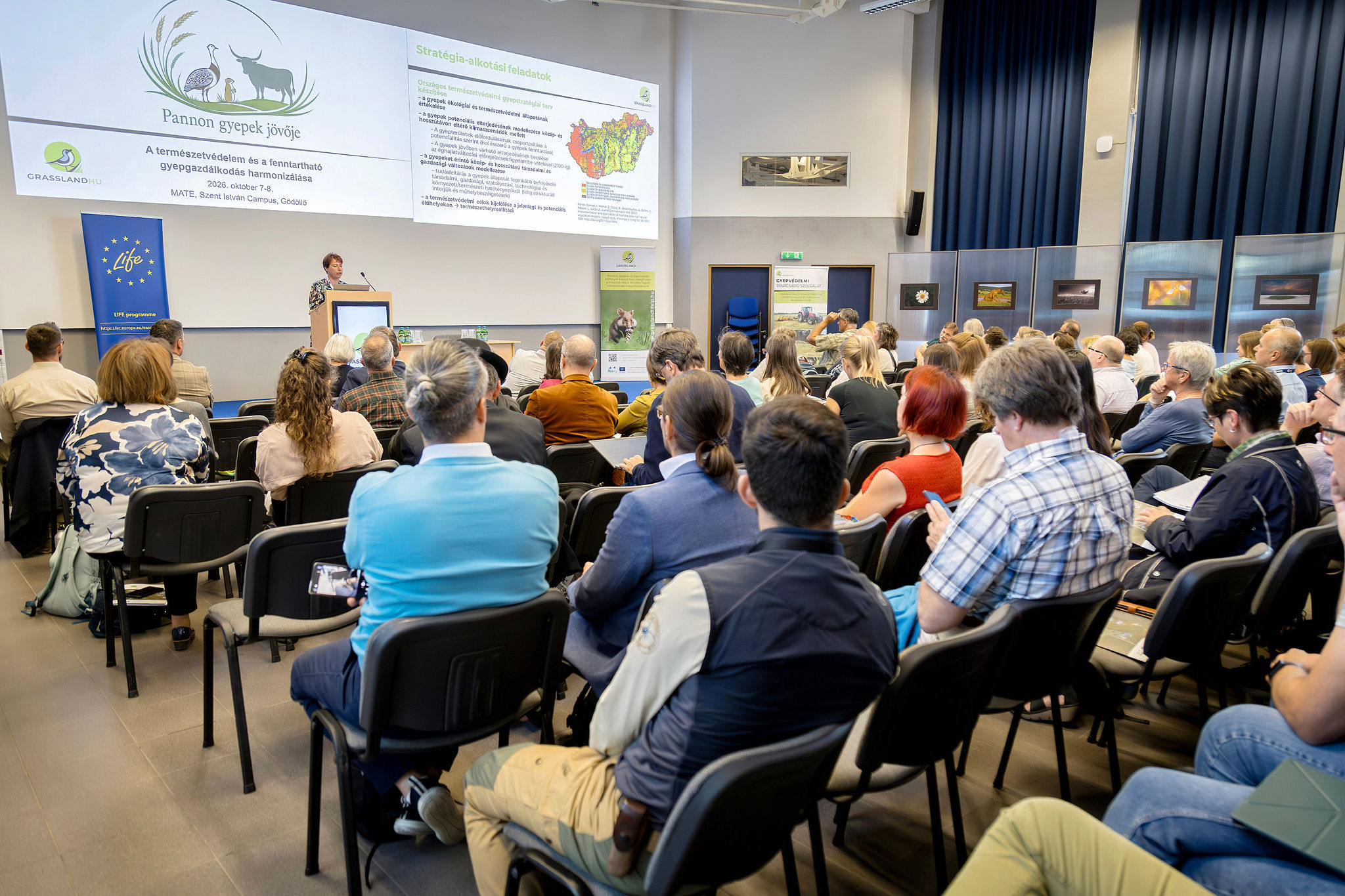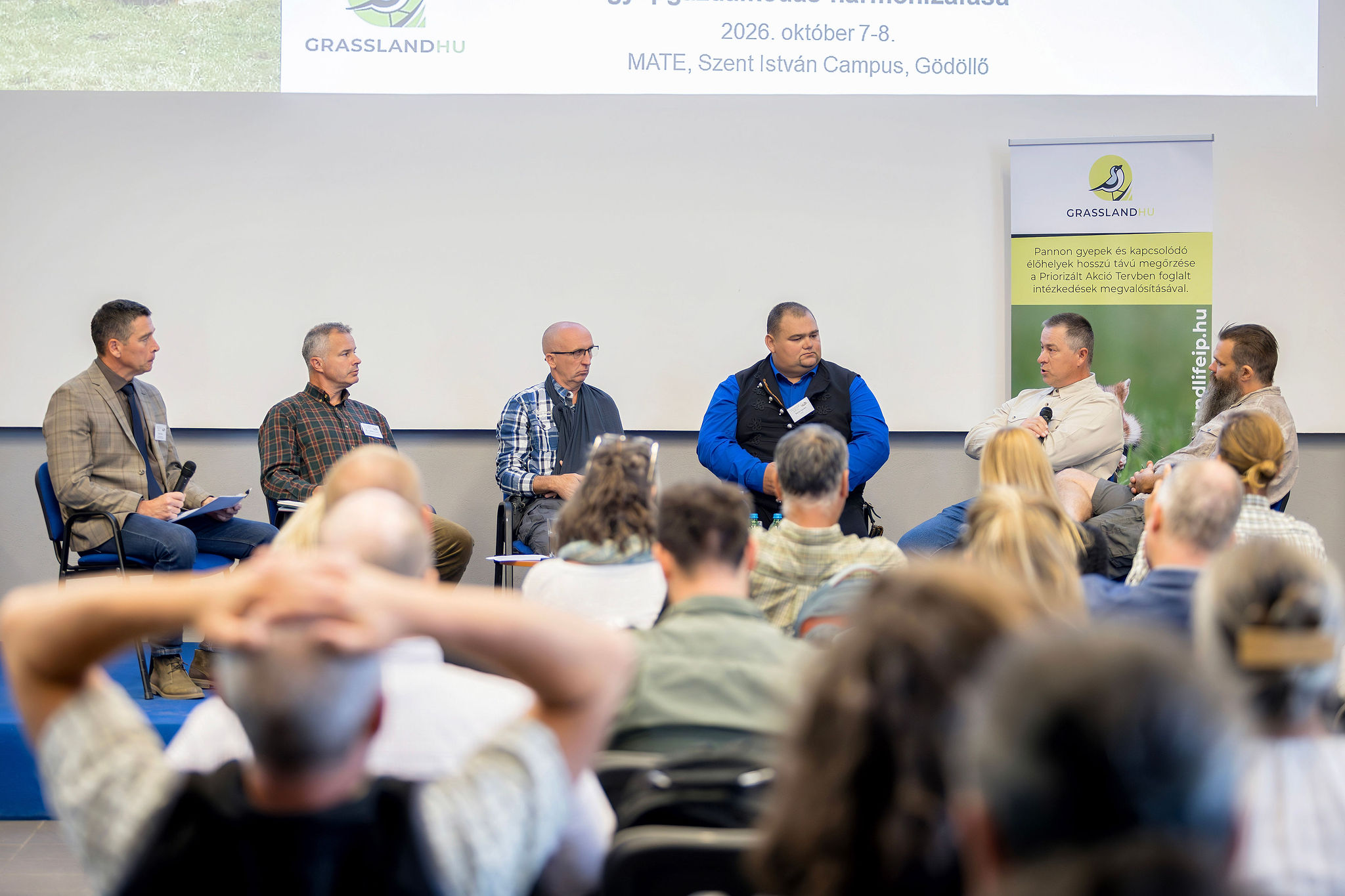
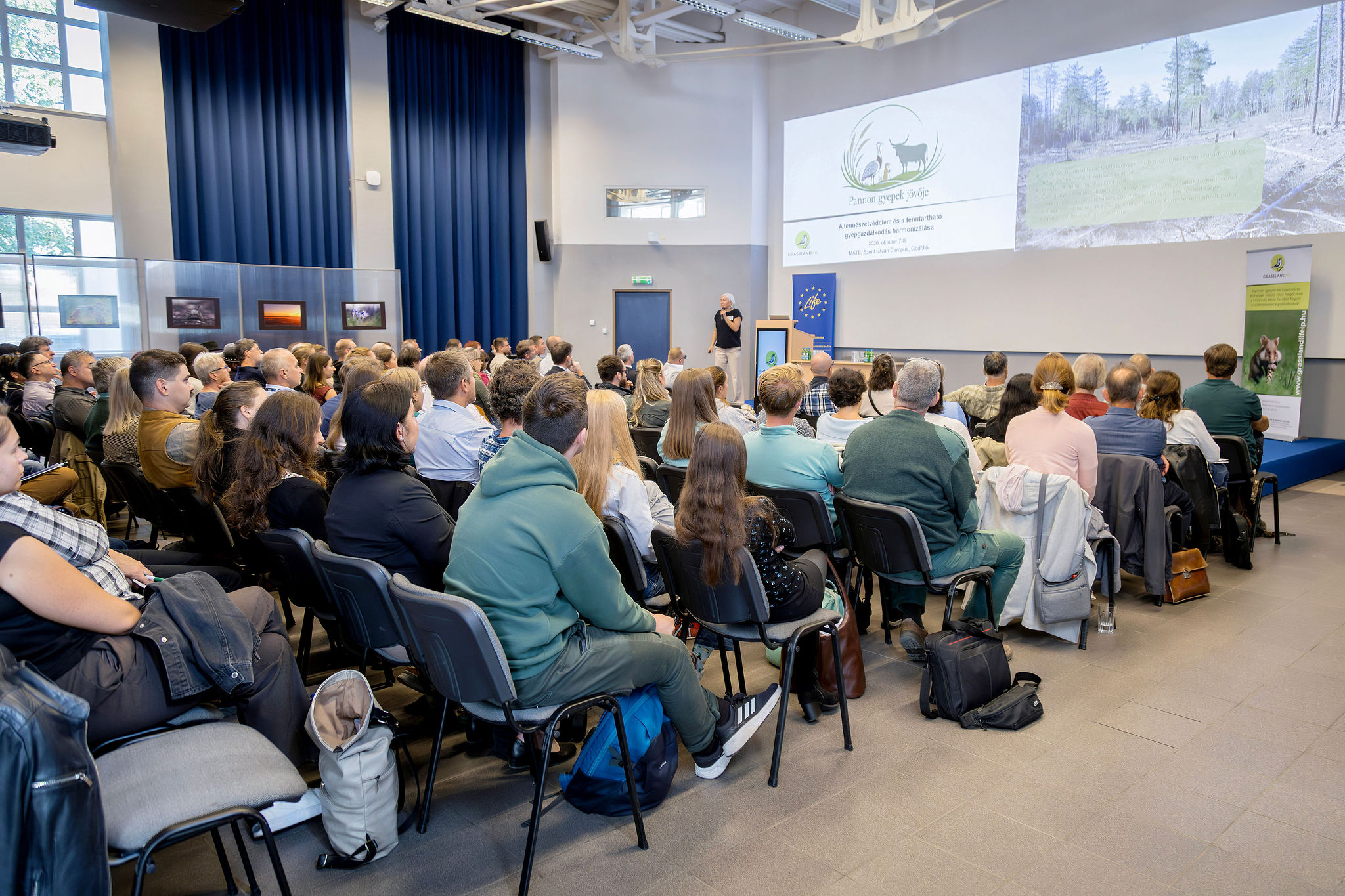
On 7–8 October, the professional conference entitled The Future of Pannonian Grasslands – Harmonising Nature Conservation and Sustainable Grassland Management was held in Gödöllő, with members of our project team among the participants. The event, organised in connection with the Grassland-HU LIFE Integrated Project, attracted considerable interest. Over the two days, a total of 250 researchers, nature conservation professionals, land managers, agricultural experts, educators and decision-makers came together to discuss opportunities for conserving and sustainably managing grasslands in Hungary.
Pannonian grasslands are habitats of outstanding nature conservation importance, providing a home to numerous protected plant and animal species while also playing a vital role in the ecological functioning of the landscape. However, their long-term survival is increasingly threatened by climate change, more frequent and severe droughts, changes in water balance and shifts in land use.
One of the conference’s central themes was how grassland management can adapt to these changing environmental conditions. The presentations and professional discussions highlighted the complexity of developing management practices that adequately address nature conservation requirements. The methods, timing and intensity of mowing and grazing must be tailored to the ecological characteristics of each habitat, the requirements of the species present and the prevailing environmental conditions.
Aligning research findings with practical experience, alongside the long-term monitoring of management interventions, is essential to developing appropriate management practices. Monitoring and the evaluation of results make it possible to review management methods in light of the evidence gathered and adjust them where necessary.
The event also placed particular emphasis on conserving grassland biodiversity, the habitat requirements of protected species, habitat restoration, the control of invasive plant species, and the application of modern monitoring and geospatial technologies.
The issues discussed at the conference clearly demonstrated that grassland management cannot focus solely on the requirements of individual species or conservation features in isolation. Habitat structure, vegetation composition, the needs of insect and bird communities, and the effects of grazing and other management interventions form an interconnected system. Consequently, the planning of nature conservation measures must take account of ecological processes and the needs of different groups of organisms in an integrated manner.
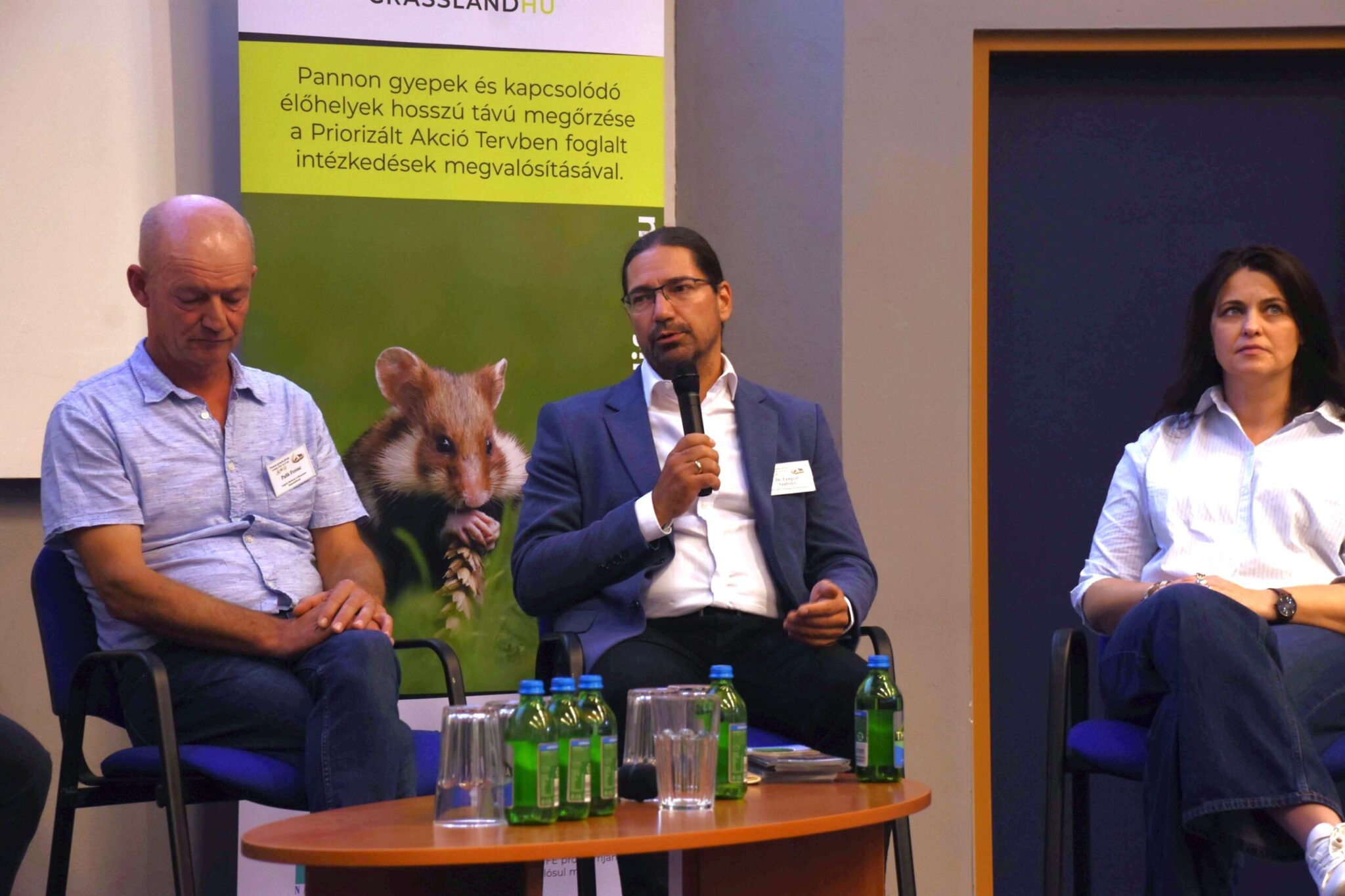
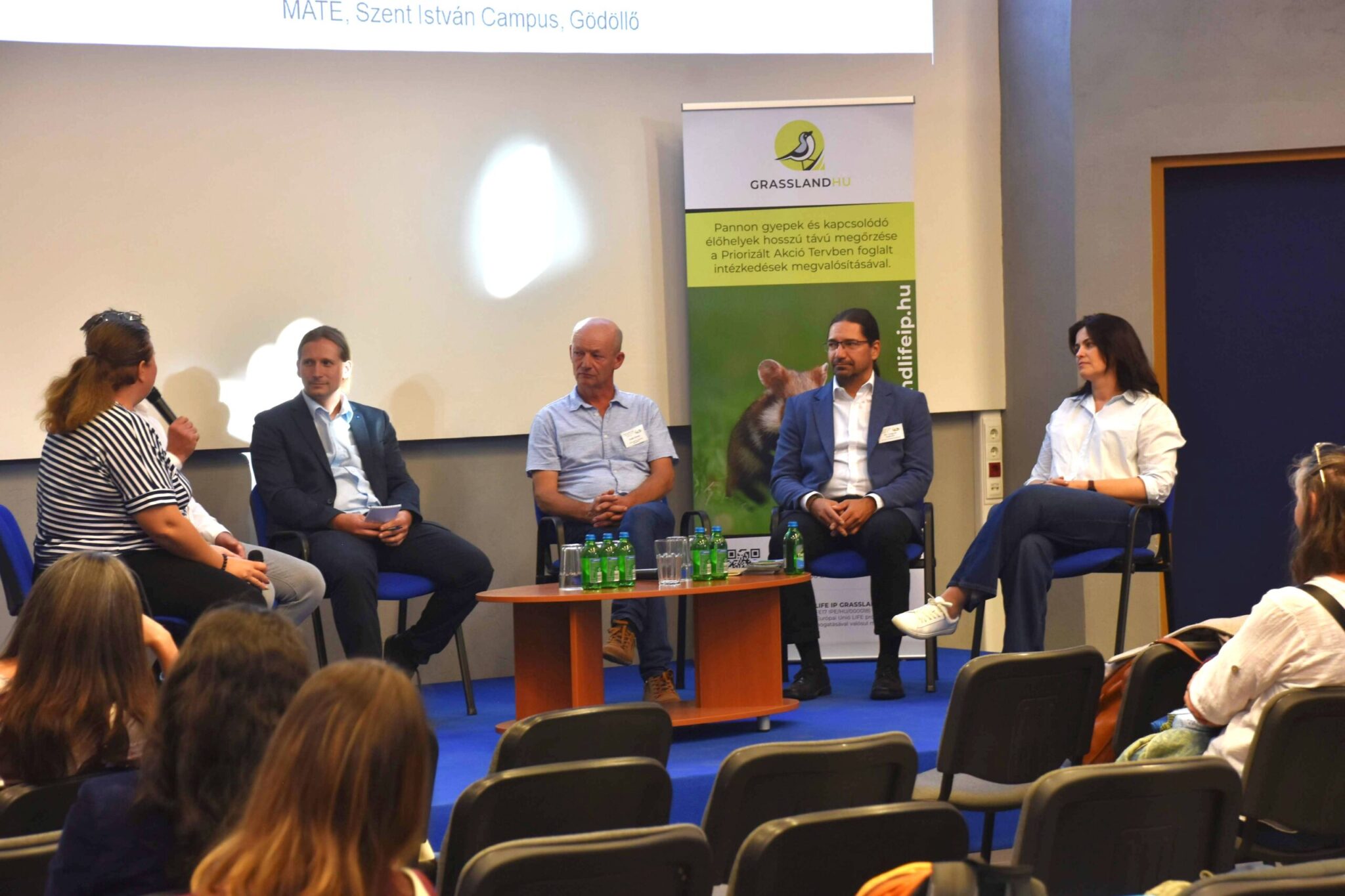
One of the conference sessions that was particularly important to us was the roundtable discussion entitled Living Soil, Resilient Grasslands – The Role of Soil Life in Grassland Management. Among the invited experts was Dr Szabolcs Lengyel, the leader of our project. Moderated by agricultural adviser Adrienn Gyenes, the discussion featured contributions from Dr Endre Dobos, Dr Szabolcs Lengyel, Ferenc Palik, Dr Szilárd Szentes and Dr Aliz Márton. Among other topics, the participants explored the role of nutrient replenishment in improving grassland condition during periods of drought, when fertilisation is justified, and which forms of nutrient application are most appropriate.
Another key topic was the relationship between soil biota and grassland management, as well as the timing and potential ecological impacts of veterinary treatments, particularly the use of ivermectin-based anthelmintic preparations. This issue is also of major importance for insect-friendly grazing. The dung of grazing livestock is an integral component of organic matter cycling in grassland ecosystems, providing a food source, breeding substrate and developmental habitat for numerous arthropods. Dung beetles and other dung-dwelling organisms contribute to dung decomposition and nutrient cycling, while also indirectly influencing soil functioning and food availability for insectivorous birds and other animals.
In addition, we participated in the conference poster session with our poster entitled The LIFE for BUGS & BIRDS Project – How Does Insect-Friendly Grazing Promote and Maintain Biodiversity in Pannonian Salt Steppes and Loess Steppe Grasslands?
One of the key messages of the two-day event was that nature conservation objectives and sustainable grassland management are not separate, unrelated fields. Appropriate, well-planned agricultural use can contribute to the persistence of many valuable grasslands, particularly where grazing practices take nature conservation considerations into account. Developing suitable management practices, however, requires the integration of research findings, nature conservation experience and local land management knowledge. Dialogue among researchers, nature conservation professionals, land managers and decision-makers can help ensure that ecologically beneficial solutions are also feasible in everyday practice.
The conference provided an opportunity for representatives of different disciplines to exchange experience and discuss shared challenges and potential solutions relating to grassland conservation.
The Future of Pannonian Grasslands conference reaffirmed that the long-term conservation of grasslands of high nature conservation value requires continuous adaptation, up-to-date knowledge and collaboration. The practical application of scientific findings, monitoring the effects of management interventions and taking local experience into account can all contribute to more effective nature conservation.
For our team, attending the conference also provided an opportunity to share our experience with insect-friendly grazing with a wider professional audience and to contribute to the ongoing professional dialogue on issues of common concern to grassland management and nature conservation.
The long-term survival of Pannonian grasslands is a shared responsibility. Achieving this requires a concerted effort in which nature conservation objectives, sustainable land management and cooperation across different disciplines all play a decisive role.
The conference Book of Abstracts can be accessed HERE, and the poster presenting our project is available HERE.
Written by Renáta Gál
 Fotó: HOI